

Designing a custom kitchen is an exciting process for any homeowner. Every detail matters, from cabinetry to countertops, but the right lighting plan is one of the most important parts of your design. Proper lighting helps the room feel welcoming while making everyday tasks safer and easier.
With the right approach, your kitchen can become the most comfortable and visually appealing space in your home, perfect for both daily routines and entertaining guests.
Best Lighting For Custom Kitchen Ideas
A successful kitchen layout depends on a thoughtful lighting plan rather than a single overhead fixture. Layered lighting creates a polished, high-end look in a custom kitchen. By combining multiple light sources, you can make the room feel larger, brighter, and more inviting.
Each layer serves a purpose, whether it is task lighting for work areas or accent lighting for design features. Planning your lighting around how you cook, prep, and gather ensures every corner is well-lit.
Good lighting can also increase the overall value of your home. Buyers are drawn to kitchens that feel bright and functional. Mixing different lighting styles adds personality and flexibility to the space.
For example, recessed ceiling lights can provide general illumination, while decorative fixtures add character. This combination allows you to adjust the mood throughout the day and creates a kitchen that looks just as good at night as it does during the day.
Under-Cabinet Lighting to Improve Prep Areas
Upper cabinets often cast shadows on countertops, making food prep more difficult. Under-cabinet lighting is an effective way to eliminate these dark areas. It delivers focused light directly onto work surfaces, helping you see clearly while chopping, measuring, and cooking.
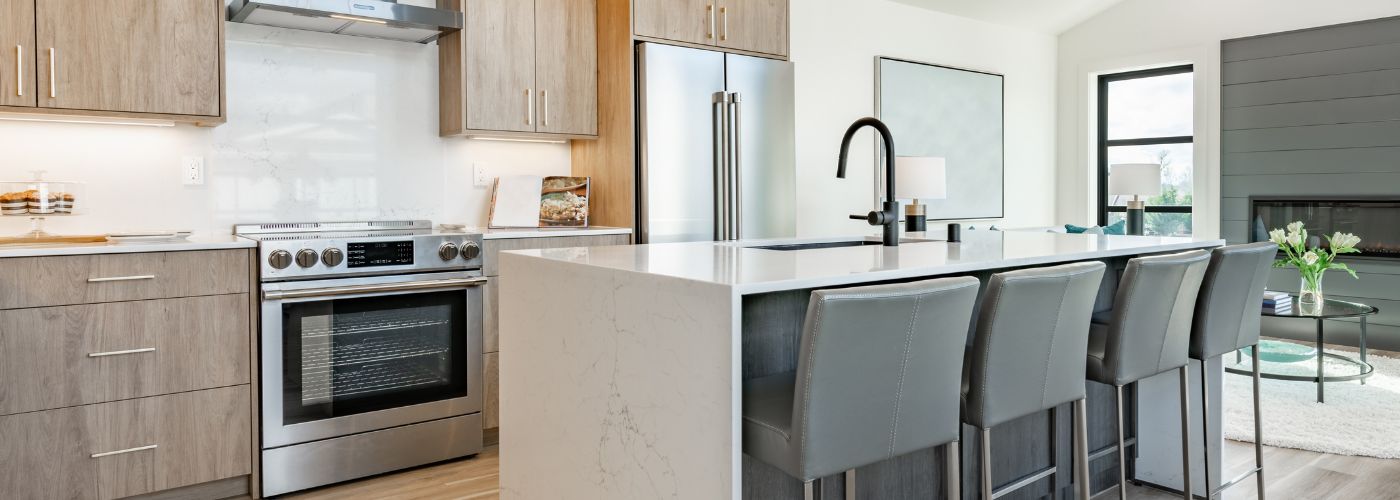
This added visibility improves safety and makes everyday tasks more comfortable. Because these fixtures are slim and discreet, they blend seamlessly into your cabinetry without taking up counter space.
LED strip lights and puck lights are popular choices for under-cabinet installation. These fixtures can also enhance the look of your backsplash and countertops. They use minimal energy while providing strong, even illumination.
Many homeowners appreciate how under-cabinet lighting doubles as a soft night light, adding warmth and elegance to the kitchen after dark. It is a simple upgrade that delivers noticeable visual and functional benefits.
Statement Pendants To Anchor Kitchen Islands
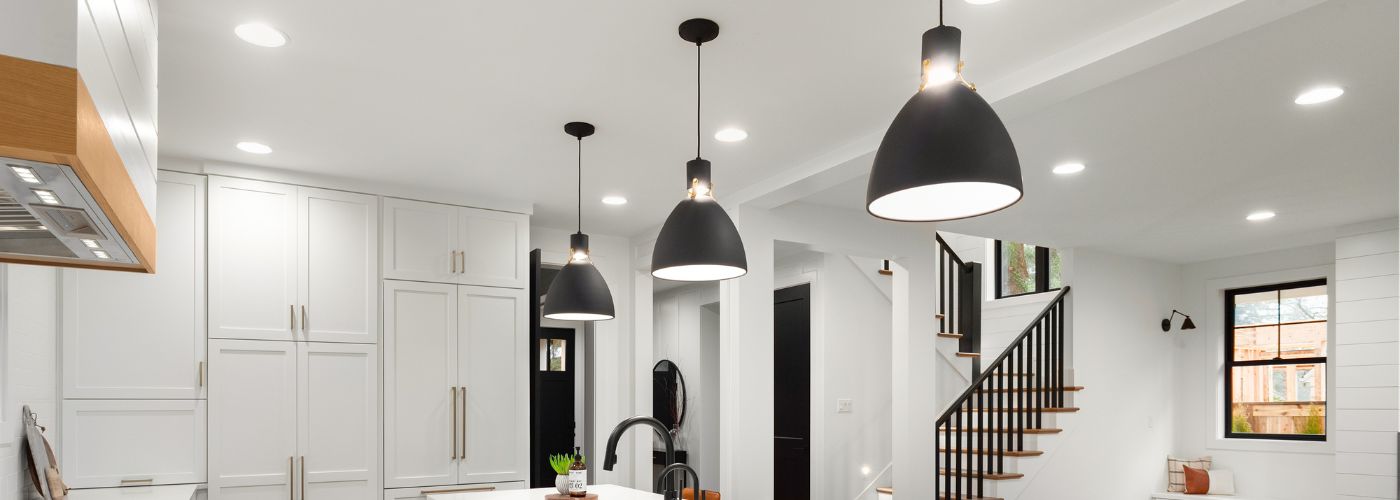
The kitchen island is often the heart of the home, serving as a place to cook, eat, and gather. Statement pendant lights act like decorative focal points above the island. They draw attention upward and help define the space within an open floor plan.
Choosing fixtures that complement your color palette and materials can tie the entire design together. Larger pendants make a bold impression, while smaller ones create a clean, balanced look.
Proper placement is key to getting the most from pendant lighting. Pendants should be hung high enough to keep sightlines clear but low enough to light the island surface.
Depending on the island’s length, two or three fixtures usually provide balanced coverage. These lights offer focused illumination for meals, homework, and casual gatherings, making the island both functional and stylish.
Set The Mood With Dimmable Lighting
A kitchen is used for many activities throughout the day, from early-morning breakfasts to evening gatherings. Dimmable lighting gives you control over the atmosphere.
Bright light works well for cleaning and cooking, while softer light creates a relaxed setting for entertaining. With modern LED-compatible dimmer switches, adjusting the mood of your kitchen is easy and efficient.
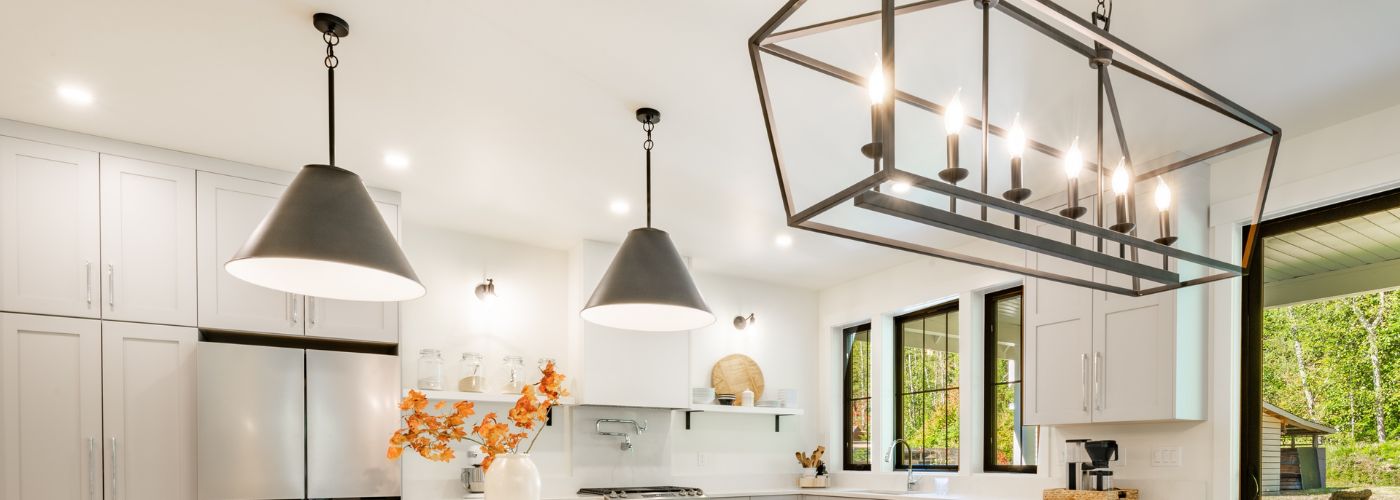
Dimmers are also practical from an energy-saving perspective. Reducing light output helps extend the life of your bulbs and lowers energy costs.
This small upgrade allows you to tailor lighting to different occasions while adding depth and warmth to the space. Many homeowners find dimmers become an essential feature they use daily.
Pair Warm and Neutral Light Sources
The color temperature of your lighting plays a major role in how your kitchen feels. Combining warm and neutral light sources creates balance and comfort.
Warm light adds coziness and works well in dining and decorative areas, while neutral white light is ideal for task-heavy zones. Using the right light color in each area prevents the kitchen from feeling harsh or overly clinical.
Light bulbs are labeled with a Kelvin rating that indicates color temperature. Neutral light helps show the true colors of food and materials.
Pairing it with warmer lighting in gathering areas adds contrast and visual interest. This thoughtful mix keeps the kitchen bright yet inviting, showing careful attention to detail in your custom design.
Consider Smart LED Lighting
Advances in technology have made lighting more convenient than ever. Smart LED lighting lets you control your kitchen lights using a smartphone or voice commands.
You can schedule lights to turn on in the morning, adjust brightness remotely, or change settings with ease. These systems are energy efficient and designed to last for years, making them a practical and modern addition.
Smart lighting systems are easy to integrate into existing fixtures. They also enhance home security by allowing you to control lights while away.
With remote access and automation, your kitchen lighting becomes both functional and intelligent. This upgrade adds convenience, efficiency, and a modern feel to any custom kitchen.